
ExxonMobil
ExxonMobil's IT organization was moving from waterfall to agile, and teams needed somewhere to learn what that meant in practice. The Agile Resource Hub centralized learning resources, tools, and references into a shared internal site. As the only designer on a dev-focused team, I led the redesign and used it to introduce design thinking to the org, reaching 100% NPS post-launch and establishing practices that outlasted the project.
Role: UX/UI Design Lead, UX/UI Design Mentor
Team: 1 PM, 1 PO, 4 Engineers
Duration: 4 months
Industry: Energy
The Problem
I conducted user interviews with 13 IT employees across diverse roles, regions, and experience to understand how they used the Evolve site and where it fell short. Through thematic analysis, two core problems emerged:
92% of users cited missing or outdated content,
77% struggled with cumbersome navigation that made information hard to find.
The Approach
For the site to function as a reliable hub, it needed updated content - which I coordinated with page owners - and clearer structure. I mapped the old site against user feedback to identify what to consolidate, elevate, or remove:
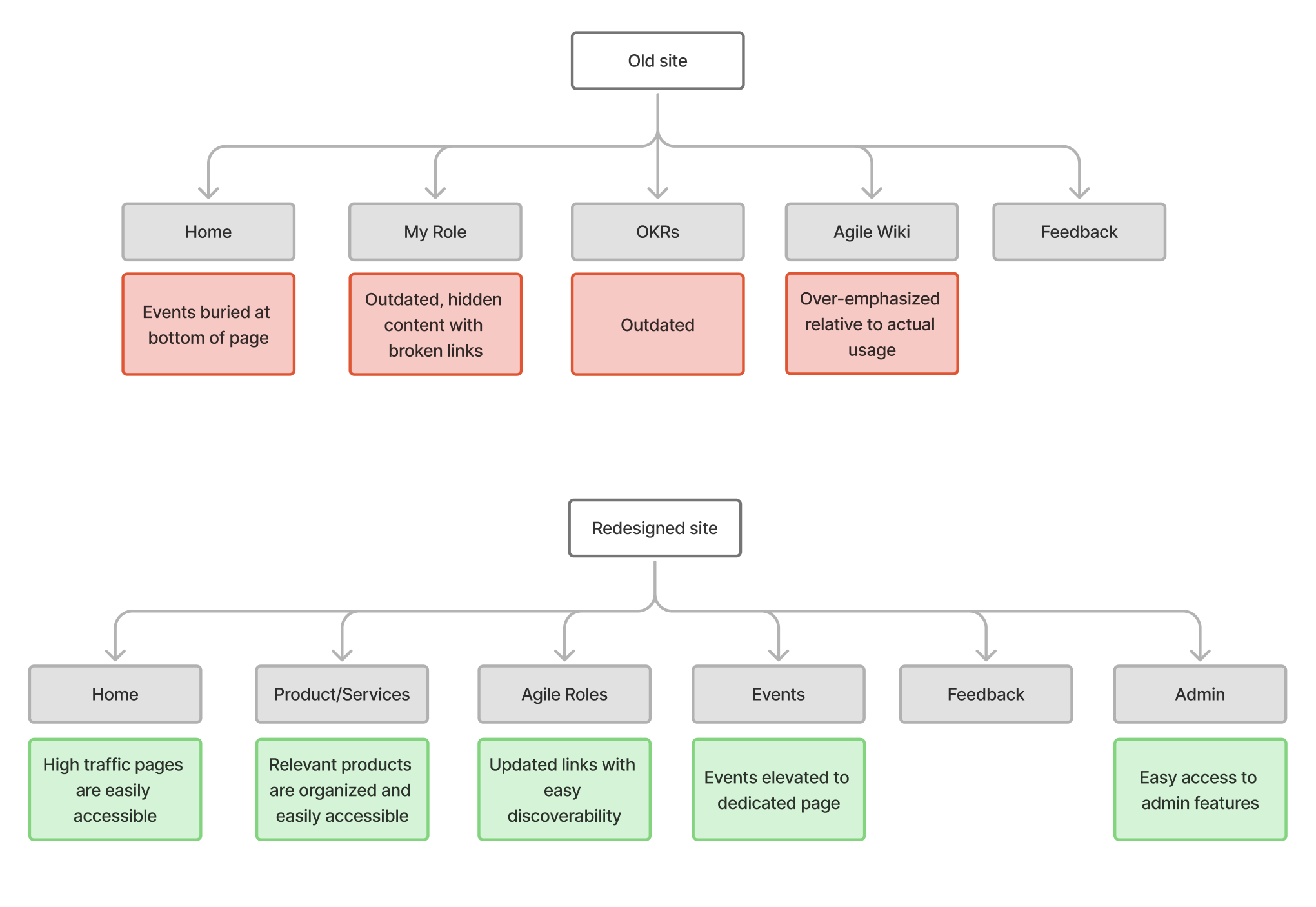
I restructured the information architecture to surface high-traffic pages, elevate events to a dedicated section, and create clear pathways for both learning and content management - addressing the needs of both learners seeking resources and admins managing content.
Final Designs
With the structure defined, the focus shifted to visual design within ExxonMobil's existing design library. Usability testing validated the new information architecture before committing to high-fidelity.
Homepage - Retructured around common entry points from research
Roles - Consolidated per-role resources that were scattered across the old wiki
Products and Services - Grouped tools by the Agile activity they support
Events - Added by request, with filters that make sessions findable by role
An overview of the redesigned site's simplified navigation and content hierarchy across pages
Updated iconography helped to establish a unified visual language and strengthen brand recognition
Impact & Takeaways
The redesigned site hit 100% NPS post-launch - users could find what they needed, and the content was actually there when they got there.
Working as the only designer on a dev team meant building the process and the product simultaneously. I pulled teammates into research sessions, set expectations about design in standups, and mentored a developer who wanted to learn the process. We held 1:1s alongside shadowing opportunities, where she acted as a collaborator rather than just an observer. She eventually moved into a UX role within the team.